
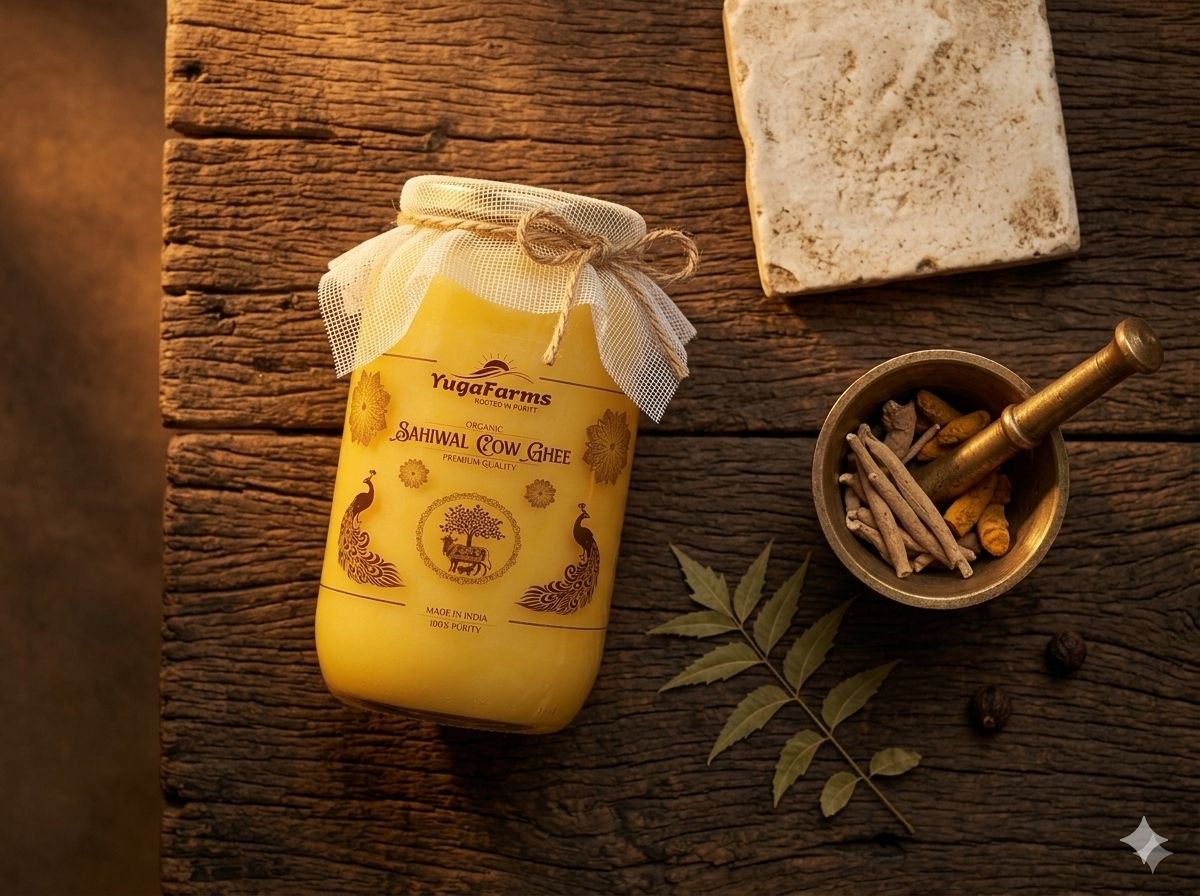
Is A2 Bilona Ghee Good for Joint Pain and Bone Health? What Ayurveda and Modern Science Both Say
Everyone's grandmother rubbed ghee on aching knees. Turns out, she wasn't wrong.
There's a joke that does the rounds in Indian families when someone starts complaining about knee pain.
"Dadi ke zamaane mein ghee khate the — yeh problem nahi thi."
In dadi's time, people ate ghee. This problem didn't exist.
It sounds like nostalgia talking. But when you look at the data on joint health in India — and at what's actually happening to joints on the inside when they deteriorate — the joke starts to sound less like nostalgia and more like a hypothesis worth taking seriously.
India has one of the highest rates of osteoarthritis in the world. According to estimates, over 180 million Indians are affected by some form of arthritis — more than diabetes and cancer combined. And the problem is getting younger. People in their 30s and 40s are now showing up with joint pain that used to belong to a much older generation.
What changed? A lot of things. But one of them, documented and increasingly discussed by nutritionists and Ayurvedic practitioners both, is the shift away from traditional fats — including ghee — toward refined industrial cooking oils.
This blog is about what A2 Bilona Ghee actually does for your joints and bones. Not what the packaging claims. What the physiology says.
Why Joints Break Down in the First Place
To understand why ghee might help, it helps to understand what's happening when joints start causing pain.
A joint is where two bones meet. Between those bones is a layer of cartilage — a smooth, shock-absorbing tissue that allows the joint to move without bone grinding on bone. Surrounding the joint is the synovial membrane, which produces synovial fluid — the lubricant that keeps the whole system moving smoothly.
When joints break down, it usually happens through a combination of:
Chronic inflammation. Inflammatory signals in the body attack the synovial membrane and, over time, break down cartilage. This is the central mechanism in both osteoarthritis and rheumatoid arthritis.
Inadequate lubrication. Synovial fluid is largely made of water and hyaluronic acid, but it requires a healthy inflammatory environment to function properly. Chronic systemic inflammation degrades its quality.
Nutritional deficiencies. The cartilage matrix requires collagen, which requires vitamin C and specific amino acids. Bone density depends on calcium, vitamin D, vitamin K2, and magnesium. Synovial tissue requires healthy fats to maintain its integrity. When these are missing from the diet — or when the body can't absorb them properly — the entire system weakens faster than it repairs.
Oxidative stress. Free radicals accelerate the breakdown of joint tissue. Antioxidants slow this process. The ratio of oxidative stress to antioxidant defence is a significant determinant of how quickly joints age.
Now look at that list and then look at what A2 Bilona Ghee contains.
What A2 Bilona Ghee Contains That Matters for Joints
Butyric Acid — The Anti-Inflammatory Short-Chain Fat
Ghee — particularly bilona ghee made from curd, not cream — is one of the richest dietary sources of butyric acid. Butyric acid is a short-chain fatty acid that has been extensively studied for its role in reducing systemic inflammation.
Here's why this matters for joints: joint pain is almost always driven by inflammation. The inflammatory cascade that degrades cartilage and triggers pain receptors in the synovial tissue requires sustained inflammatory signalling. Butyric acid has been shown to inhibit key inflammatory pathways — specifically by blocking histone deacetylases (HDACs) and suppressing NF-κB, one of the most studied pro-inflammatory transcription factors in the body.
When systemic inflammation is lower, joints experience less ongoing damage. This is not a ghee-specific miracle — it is a downstream effect of eating a diet that consistently delivers anti-inflammatory compounds instead of pro-inflammatory ones.
Vitamin K2 — The Bone and Cartilage Nutrient Nobody Talks About
Vitamin K2 is present in properly made ghee from pasture-fed desi cows, and it is possibly the most underappreciated nutrient in bone and joint health.
Here is what K2 does that most people don't know:
K2 activates a protein called osteocalcin, which is responsible for binding calcium into the bone matrix. Without activated osteocalcin, calcium circulates in the bloodstream rather than being properly deposited into bones — meaning you can have adequate calcium intake and still lose bone density if K2 is deficient.
K2 also activates matrix GLA protein (MGP), which prevents calcium from depositing in the wrong places — specifically in arterial walls and in cartilage. Calcification of cartilage is a recognised mechanism in the progression of osteoarthritis. Adequate K2 helps prevent this aberrant calcification, keeping cartilage more flexible and functional for longer.
India has extremely high rates of K2 deficiency. This is largely a consequence of reduced consumption of traditional dairy products — including ghee, curd, and fermented dairy — which were historically the primary dietary sources of K2 in Indian diets.
Vitamin D — The Absorption Regulator
Ghee contains vitamin D, a fat-soluble vitamin that is essential for calcium absorption. Without adequate vitamin D, even good dietary calcium intake is largely wasted — the gut simply doesn't absorb it efficiently.
Vitamin D deficiency is epidemic in India — estimates suggest 70-90% of Indians have insufficient levels despite living in a sun-rich country, largely due to indoor lifestyles and — critically — a reduction in dietary fat intake. Fat-soluble vitamins require fat to be absorbed. Low-fat diets, however well-intentioned, impair absorption of vitamins D, A, E, and K simultaneously.
When ghee is consumed, it serves as a delivery vehicle for vitamin D absorption. The fat in ghee emulsifies the vitamin and carries it through the intestinal wall. This is one of the clearest examples of a traditional food practice making physiological sense.
Vitamin A — For Synovial Membrane Integrity
Vitamin A (in its retinol form, found in animal fats) is required for the maintenance of epithelial and membrane tissues throughout the body — including the synovial membrane that lines joints and produces lubricating fluid.
Chronic vitamin A deficiency — which is more common than most people realise in populations that have reduced dietary fat — contributes to reduced membrane integrity and impaired healing capacity in joint tissue.
Conjugated Linoleic Acid (CLA) — The Anti-Inflammatory Fatty Acid
CLA, found in meaningful quantities in ghee from pasture-fed desi cows, has been studied for a range of effects including anti-inflammatory action. Some research suggests CLA may modulate immune function in ways that reduce the autoimmune-mediated joint destruction seen in rheumatoid arthritis, though this research is ongoing and should not be overstated.
What is more consistently established is that CLA contributes to a less pro-inflammatory internal environment — which, as noted, is the central factor in joint health.
Omega-3 Fatty Acids — The Fat Your Joints Need
Bilona ghee made from pasture-grazed Sahiwal cow milk has a significantly better omega-3 to omega-6 ratio than commercial ghee or refined vegetable oils. Omega-3 fatty acids are the dietary fat most directly associated with reduced inflammatory signalling. They are the precursors to anti-inflammatory prostaglandins — the molecules that counterbalance the pro-inflammatory arachidonic acid pathway that drives joint pain.
The modern Indian diet — heavy in refined sunflower and soybean oil — is massively skewed toward omega-6 fatty acids, which are pro-inflammatory in excess. Replacing even a portion of this with the more balanced fat profile of A2 bilona ghee shifts the omega-3 to omega-6 ratio in a direction that directly supports reduced joint inflammation.
The Ayurvedic Framework: Snehana and the Lubrication of Joints
Ayurveda has understood joint health through the concept of Vata — the dosha (biological energy) associated with movement, the nervous system, and dryness. When Vata is aggravated — through stress, cold weather, irregular eating, inadequate fat intake, or ageing — it manifests in the body as dryness and degeneration in the tissues it governs. Joints, being sites of movement, are particularly vulnerable to Vata imbalance.
The Ayurvedic treatment principle for Vata-related joint disorders is Snehana — internal and external oleation using fats, particularly ghee. Classic texts including the Ashtanga Hridayam describe ghee as the preeminent substance for balancing Vata, lubricating tissue, and reducing the "roughness" (dryness, crackling, deterioration) of the joints.
This is not metaphor. The physiology of why ghee helps joints is precisely what the modern science above describes — anti-inflammatory action, fat-soluble vitamin delivery, restoration of lubricating membrane function. The Ayurvedic framing describes the same outcomes in a different language.
External application of warm ghee on painful joints — a practice described in Ayurvedic texts as part of Abhyanga (oil massage therapy) — is also of interest. Some practitioners and patients report meaningful relief from applying warm ghee directly to arthritic or painful joints. While this is harder to study rigorously, the plausibility mechanism involves transdermal absorption of fat-soluble compounds and local anti-inflammatory effects through the skin.
What the Research Says
Let's be direct about what is and isn't established.
There is strong research establishing that:
- Butyric acid reduces systemic inflammation through well-characterised molecular pathways
- Vitamin K2 deficiency is linked to faster cartilage deterioration and lower bone density
- Vitamin D deficiency is strongly associated with worse outcomes in osteoarthritis and osteoporosis
- Omega-3 fatty acids reduce joint inflammation in both osteoarthritis and rheumatoid arthritis
- Traditional Indian populations that maintained ghee as a primary fat had lower rates of joint disease than those who switched to refined oils
What is less established:
- That ghee alone, in isolation, can reverse existing joint damage
- That any specific dose of ghee has a measurable, quantified effect on individual joint health markers
The honest position is this: the nutrients in A2 Bilona Ghee are genuinely relevant to joint and bone health. Whether consuming ghee produces measurable joint improvements in any individual depends on their baseline diet, the quality of the ghee, how much they consume, and what else they are eating and doing. Ghee is not a medicine. It is a food — but a food with a meaningful and well-characterised nutritional profile.
Joint Health Is Also About What You Are Not Eating
Here is the part of the conversation that is as important as what ghee contains.
Refined vegetable oils — sunflower, soybean, cottonseed, partially hydrogenated oils — are extremely high in omega-6 fatty acids. When the ratio of omega-6 to omega-3 in the diet becomes very high (the modern Indian diet typically has a ratio of 15:1 to 20:1, versus the traditional ratio of closer to 4:1), the body's inflammation regulation is chronically pushed toward the inflammatory side. This is a direct contributor to joint pain and cartilage deterioration.
Additionally, refined oils go through industrial processing that creates oxidised byproducts — aldehydes and lipid peroxides — when heated to the high temperatures used in Indian cooking. These compounds are directly pro-inflammatory and contribute to systemic oxidative stress that degrades joint tissue.
When you replace refined oil with A2 Bilona Ghee for your daily cooking, you are doing two things simultaneously: removing a source of pro-inflammatory, oxidation-prone fat and replacing it with a more stable, anti-inflammatory, nutrient-dense fat. Ghee's smoke point of approximately 250°C makes it one of the most stable cooking fats at high heat. It does not oxidise and degrade the way refined oils do.
Practical Guidance: How to Use A2 Bilona Ghee for Joint Health
Eat it consistently, not occasionally. The anti-inflammatory and nutritional benefits of ghee are cumulative. A teaspoon here and there does very little. One to two teaspoons per meal, consistently, as your primary cooking fat — that is what makes a difference over months.
Use it for high-heat cooking instead of refined oil. Tadka, sautéing vegetables, frying spices — all of this is better done in ghee than refined oil, both for taste and for the oxidative stability reasons described above.
Add a small amount to cooked dal or khichdi. The fat-soluble vitamins in ghee — D, K2, A — are absorbed along with the fat. Adding ghee to warm food is one of the most natural and efficient delivery mechanisms for these nutrients.
Try warm ghee massage on painful joints. If you are experiencing arthritis pain or joint stiffness, applying warm A2 Bilona Ghee to the affected area and massaging gently is an Ayurvedic practice with enough anecdotal support and a plausible mechanism to be worth trying. Some people find it particularly helpful for knee stiffness in the morning.
Combine with sun exposure for vitamin D. Ghee provides vitamin D and, crucially, the fat required to absorb it. Pairing this with regular, moderate morning sunlight (which triggers vitamin D synthesis in the skin) addresses the two most common causes of vitamin D deficiency simultaneously.
Be patient. Bone remodelling and cartilage health are slow processes. Give any dietary change at least 8–12 weeks before evaluating results. Blood markers (vitamin D, CRP for inflammation) are more useful than waiting for pain to change.
The Comparison: A2 Bilona Ghee vs Refined Oil for Joint Health
| Factor | A2 Bilona Ghee | Refined Vegetable Oil |
|---|---|---|
| Omega-3 content | Present (especially from pasture-fed cows) | Minimal or absent |
| Omega-6:Omega-3 ratio | Balanced (~1.4:1) | Extremely skewed (15:1 to 50:1) |
| Vitamin K2 | Present | Absent |
| Vitamin D | Present | Absent or destroyed in processing |
| Butyric acid | Present | Absent |
| Oxidation at high heat | Highly stable, does not oxidise | Oxidises readily, creates inflammatory aldehydes |
| Systemic inflammation | Anti-inflammatory net effect | Pro-inflammatory net effect |
| Cartilage health | Supports via K2, anti-inflammation | Worsens via oxidation, omega-6 excess |
Frequently Asked Questions
Q: Can ghee actually reduce knee pain? A: Ghee is not a pain medication and cannot replace medical treatment for diagnosed arthritis. However, the anti-inflammatory compounds in A2 Bilona Ghee — particularly butyric acid and the omega-3 to omega-6 ratio — contribute to a lower-inflammation internal environment that is associated with less joint pain over time. Many people report improved joint comfort after consistently using ghee as their primary cooking fat for several months.
Q: Is ghee good for osteoporosis? A: The vitamin K2 and vitamin D in A2 Bilona Ghee are directly relevant to bone density. K2 ensures calcium is deposited into bone rather than circulating in blood or depositing in soft tissue. Vitamin D is required for calcium absorption. Both deficiencies are strongly associated with osteoporosis. Ghee is not a treatment for diagnosed osteoporosis, but it is a meaningful dietary source of these nutrients.
Q: How much ghee should I eat for joint health? A: One to two teaspoons per meal is the standard recommendation — consistent with both traditional usage and what is practical. The goal is to use it as a daily cooking fat rather than thinking of it as a supplement to take in doses.
Q: Can I apply ghee on joints externally? A: Yes, this is a traditional Ayurvedic practice called Abhyanga. Warming the ghee slightly and massaging it into a painful joint — particularly the knees — before sleep or in the morning is practised widely. While rigorous clinical trials on this specific application are limited, the mechanism (transdermal fat absorption, local warming, massage effect) is plausible and the practice is harmless when done with pure ghee.
Q: Is A2 ghee better for joints than regular commercial ghee? A: Yes, meaningfully so. The bilona process (curd fermentation → hand churning → slow cooking) preserves higher levels of butyric acid, CLA, and fat-soluble vitamins than industrial cream-separated ghee. Ghee from indigenous A2 breeds like Sahiwal, fed on natural pasture, also has a significantly better omega-3 to omega-6 ratio. The compounds most relevant to joint health are present in much higher quantities in traditionally made A2 bilona ghee.
Q: Should I see a doctor for joint pain instead of changing my diet? A: Yes, if you have significant, persistent joint pain, see a doctor. Dietary changes — including adding quality ghee — can complement medical care but should not delay diagnosis or treatment of a condition that may require it. The role of A2 Bilona Ghee is as part of an anti-inflammatory diet that supports joint health over time, not as an acute treatment.
Q: What is the best time to eat ghee for joint health? A: Morning, on an empty stomach, is the Ayurvedic recommendation — to prime the digestive system and begin delivering butyric acid and fat-soluble vitamins before the day's eating begins. Adding ghee to your meals throughout the day is equally effective. There is no single "best time" — consistency across the day is what matters.
The Bottom Line
Your grandmother's instinct about ghee and joints was not superstition. It was the result of generations of observational learning that modern nutritional science is now explaining from the inside out.
The vitamin K2 in A2 Bilona Ghee helps calcium get into bones instead of calcifying cartilage. The butyric acid reduces the chronic inflammation that drives joint deterioration. The fat-soluble vitamins — D, A — support bone density and membrane integrity. The omega-3 to omega-6 ratio helps counterbalance the massively pro-inflammatory effect of the refined oils that replaced ghee in Indian kitchens over the past fifty years.
None of this is magic. It is food. Traditional food that happened to be nutritionally coherent in ways that modern food science is only now fully describing.
Use it consistently. Use it instead of refined oil. Give it time. Your joints — and your bones — will notice.
At YugaFarms, our A2 Sahiwal Bilona Ghee is made the traditional way — from the milk of our own Sahiwal cows on our farm in Palwal, Haryana. Every batch is lab-tested, FSSAI certified, and ISO 9001:2015 verified. We don't use third-party milk. We don't cream-separate. Our lab reports are public.
First order? Use code FIRSTGHEE for 8% off.
Related Reads
- Is A2 Bilona Ghee Good for Your Heart and Cholesterol? What the Science Actually Says
- Should You Really Eat Ghee on an Empty Stomach? What Actually Happens Inside Your Body
- Is A2 Bilona Ghee Good for Your Gut? What Ayurveda and Modern Science Both Found
- Does A2 Bilona Ghee Help with Weight Loss? The Honest Answer
- Sahiwal A2 Cow Ghee: Why This Ancient Indian Breed Makes the Finest Ghee