
Is A2 Bilona Ghee Safe During Pregnancy? What Ayurveda and Science Both Say
Published by YugaFarms · June 2026 · 13 min read
There's a moment in almost every Indian pregnancy when an older woman in the family — a naani, a saas, an aunty — slides a small steel katori of warm ghee across the kitchen counter and says, "Kha lo. Bacche ke liye achha hai."
And then there's a moment, usually right after, when the pregnant woman looks at her phone, reads something about saturated fat and weight gain, and puts the katori aside.
This tension — between what our grandmothers knew and what the internet tells us — is real. And it deserves a proper, honest answer.
So here it is.
First: Is Ghee Safe During Pregnancy?
Yes. Pure, traditional A2 Bilona Ghee is not only safe during pregnancy — when consumed in the right amounts, it actively supports both mother and child throughout all three trimesters and through the postpartum period.
This isn't just folk wisdom. Charaka Samhita, one of Ayurveda's foundational texts, specifically recommends ghee consumption during pregnancy, calling it one of the most superior fats a pregnant woman can eat. And modern nutritional science — looking at the fatty acid profiles, fat-soluble vitamins, and gut health compounds in traditionally made ghee — is starting to agree.
The important word, though, is traditional. Not every ghee is the same.
Why A2 Bilona Ghee Is Different From Regular Ghee
Most ghee sold in supermarkets today is made from A1 milk (from crossbred or mixed cows), using a cream-skimming method, and processed at high temperatures for shelf life. That product is technically ghee — but it's missing much of what makes ghee valuable.
A2 Bilona Ghee — made from A2 milk from indigenous breeds like the Sahiwal, processed through the traditional bilona churning method — is nutritionally richer in ways that matter especially during pregnancy:
- A2 beta-casein protein — easier to digest, less inflammatory than A1
- Higher CLA (conjugated linoleic acid) — anti-inflammatory, important for fetal development
- Better omega-3 to omega-6 ratio — 0.69 in bilona ghee vs 0.5 in direct-cream ghee, supporting healthy cholesterol and cellular development
- Fat-soluble vitamins A, D, E, K2 — critical for fetal bone development, eye formation, and immune function
- Butyric acid — supports gut health and reduces inflammation
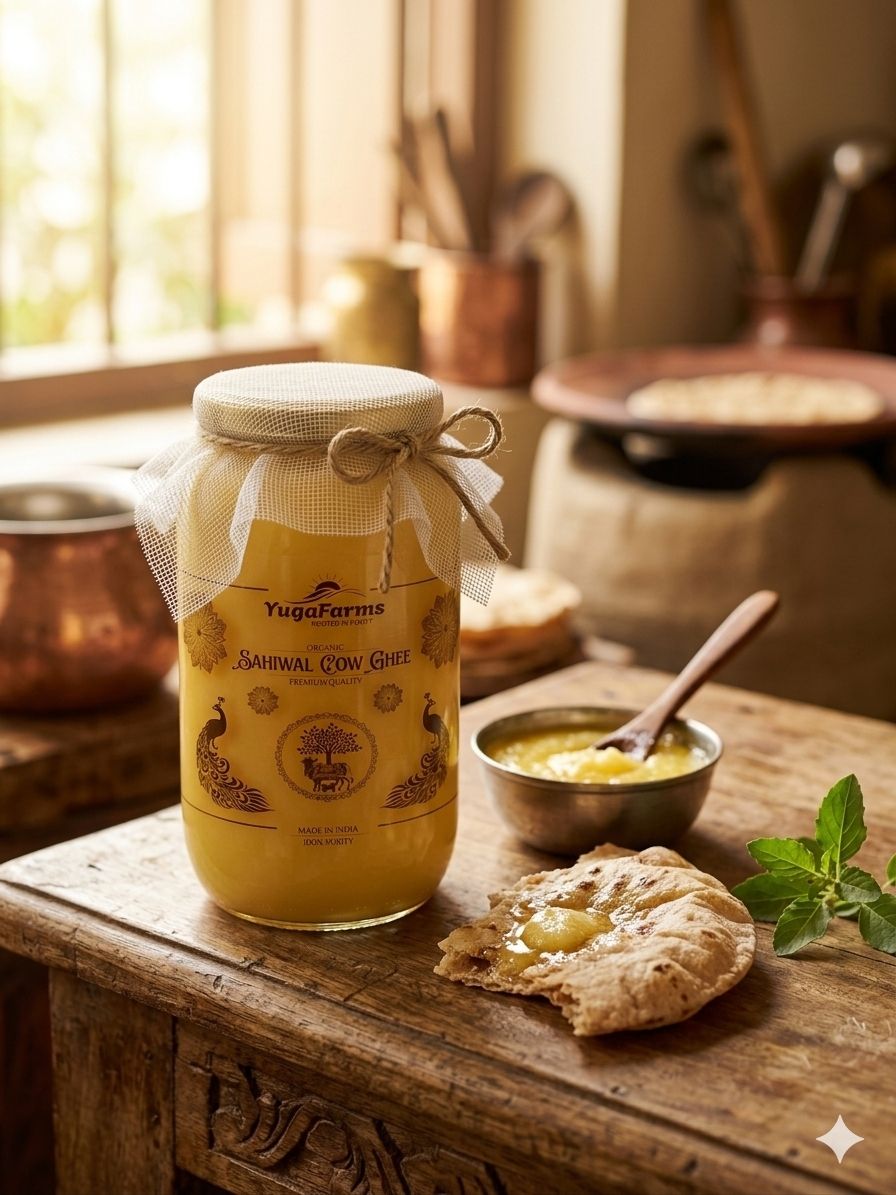
At YugaFarms, our A2 Sahiwal Bilona Ghee is made from the milk of Sahiwal cows raised in Palwal, Haryana. We churn curd the traditional way — slow, hand-churned, low-heat — to preserve every bit of this nutritional profile. You can check our lab reports here.
What Happens in Your Body When You Eat Ghee During Pregnancy
Pregnancy is one of the most nutritionally demanding phases of a woman's life. The body is simultaneously growing a new organ (the placenta), building an entirely new human being, supporting hormonal shifts, and keeping the mother's own systems running.
Here's what ghee actually does during that process:
1. It Helps Your Baby's Brain Develop
The fetal brain is made almost entirely of fat — specifically, DHA and other long-chain fatty acids. Ghee is rich in these fats. The bilona method retains higher levels of DHA compared to cream-method ghee, which is directly relevant to neurological development in the womb.
2. It Improves Vitamin Absorption
Vitamins A, D, E, and K are fat-soluble — meaning your body can only absorb them when fat is present. Ghee is one of the cleanest, most efficient fat carriers for these vitamins. Every time you eat a dal rich in Vitamin K or a sabzi high in beta-carotene (Vitamin A), a small spoon of ghee makes those nutrients more bioavailable — for you and for the baby.
3. It Helps With Constipation (Which Most Pregnant Women Deal With)
Progesterone, the hormone that dominates pregnancy, slows down the digestive system. This is why most pregnant women deal with bloating, heaviness, and constipation. Ghee acts as a natural lubricant for the intestines. One teaspoon of ghee in warm water in the morning — a classic Ayurvedic remedy — can ease this significantly without the side effects of pharmaceutical laxatives.
4. It Nourishes the Reproductive Tissues
Ayurveda talks about shukra dhatu — the reproductive tissue — as one of the most refined and nutrient-dependent tissues in the body. Ghee is considered the primary food that nourishes this tissue, supporting uterine health and the lining that the baby depends on.
5. It Manages Vata Imbalance
In Ayurvedic understanding, pregnancy — especially the third trimester — aggravates Vata dosha, which governs movement and the nervous system. Uncontrolled Vata in late pregnancy can manifest as anxiety, sleeplessness, and dryness. Ghee is the primary Vata-pacifying food. This isn't mysticism — it maps to the modern understanding that adequate fat intake supports nervous system regulation and sleep quality.
6. It Supports Mood and Mental Health
The gut-brain axis is now well-established in nutritional science. Butyric acid in ghee feeds the intestinal lining and supports a healthy gut microbiome. A healthy gut, in turn, produces the majority of the body's serotonin — the mood-regulating neurotransmitter. Pregnant women with good gut health tend to have fewer episodes of prenatal anxiety and better emotional stability.
Trimester-Wise Guide: How Much Ghee During Pregnancy?
The right amount of ghee isn't fixed — it shifts across the three trimesters, just as the baby's developmental needs shift.
First Trimester (Weeks 1–12)
This is when nausea is typically highest and appetite is lowest. Start small — half a teaspoon in warm water on an empty stomach, or on a small piece of roti. The goal at this stage is gentle nourishment and keeping Agni (digestive fire) stable. Don't force ghee if it triggers nausea.
Recommended: ½ to 1 tsp per day
Second Trimester (Weeks 13–26)
This is when appetite returns and fetal growth accelerates. The second trimester is the best time to build the habit of ghee in daily meals — in dal, on chapati, in khichdi. The baby's brain and bones are actively developing, and fat-soluble vitamins are critical.
Recommended: 1 to 2 tsp per day
Third Trimester (Weeks 27–40)
A common belief — passed through generations — is that eating large amounts of ghee in the last month "lubricates the birth canal" and makes delivery easier. To be honest with you: there's no clinical evidence for this specific claim. What is true is that adequate healthy fat intake in the third trimester supports fetal fat stores, keeps the mother's energy reserves strong for labour, and supports hormonal balance.
Recommended: 1 to 2 tsp per day (do not dramatically increase intake in the last month based on folk advice alone; consult your gynaecologist)
Note: These are general guidelines. Please consult your doctor or dietitian for personalised advice, especially if you have gestational diabetes, high cholesterol, or are on a prescribed diet plan.
Ghee After Delivery: The Postpartum Chapter Your Body Needs
In Indian tradition, the 40 days after delivery — called chilla or japa — are considered a critical recovery window. The mother's body has just completed one of its most demanding physical events. The uterus needs to contract back, internal tissues need to heal, hormone levels are swinging dramatically, and the body simultaneously needs to produce breast milk.
This is where ghee becomes, arguably, even more important than during pregnancy.
What Ghee Does Postpartum
Speeds up tissue healing. The fat-soluble vitamins in ghee — particularly Vitamin A and Vitamin K2 — are directly involved in tissue repair and wound healing. Vitamin K2 specifically supports proper calcium metabolism, helping restore bone density lost during pregnancy.
Supports lactation. Breast milk is approximately 4% fat. The quality and quantity of a mother's breast milk is directly influenced by her dietary fat intake. Mothers consuming adequate healthy fat — including ghee — tend to produce richer, more calorie-dense milk. Traditional postpartum foods like panjiri, methi laddoo, and gondh ke laddoo are all made with significant amounts of ghee — not by tradition alone, but by nutritional logic.
Rebuilds Agni (digestive fire). Labour and delivery are intensely depleting for the digestive system. New mothers often experience poor appetite, sluggish digestion, and bloating in the first weeks postpartum. Ghee is the ideal first fat to reintroduce — it's easily digestible, warming without being inflammatory, and rebuilds the gut lining through its butyric acid content.
Stabilises postpartum mood. Postnatal depression and baby blues are significantly influenced by nutritional status. Omega-3 fatty acids, B vitamins, and gut health all play a role — and ghee supports all three. Ayurveda specifically recommends ghee to balance Vata in the postpartum period, when anxiety and emotional volatility are most common.
Traditional Postpartum Foods That Use Ghee
- Panjiri — whole wheat, dry fruits, edible gum (gondh), and generous ghee; typically given in the first 2 weeks
- Methi laddoo — fenugreek seeds roasted in ghee, jaggery, dry fruits; supports lactation and joint recovery
- Khichdi with ghee — the classic first postpartum meal; easy to digest, nourishing, grounding
- Warm milk with ghee and haldi — taken at night to support sleep and hormonal recovery
If you're making these at home, use only pure A2 Bilona Ghee. The quality of fat matters here — refined or adulterated ghee will not deliver the same nutritional benefit, and postpartum is not the time to compromise.
The Myth: "Ghee Will Make Me Gain Too Much Weight During Pregnancy"
This is the biggest concern most women have — and it's worth addressing head-on.
Healthy weight gain during pregnancy is not only expected, it's necessary. The body needs fat stores to support lactation, cushion the baby, and fuel the enormous hormonal and metabolic work of pregnancy.
The fat in A2 Bilona Ghee is predominantly medium-chain fatty acids (MCFAs) and short-chain fatty acids (SCFAs) — not long-chain fats. MCFAs are metabolised differently from the long-chain fats found in refined oils: they go directly to the liver for energy rather than being stored as body fat. This is why traditional ghee eaters — in cultures where ghee has been consumed generously for generations — don't show the obesity patterns you'd expect if ghee were simply "fattening."
One to two teaspoons of A2 Bilona Ghee per day, as part of a balanced diet, is not going to cause unhealthy weight gain. What it will do is ensure the weight you do gain is metabolically healthy — supported by proper fat-soluble vitamin absorption, gut health, and hormonal balance.
How to Use A2 Bilona Ghee During Pregnancy (Practical Guide)
Morning: Half a teaspoon in warm water on an empty stomach (helps with constipation and Agni)
At meals: A small spoon on chapati, dal, or rice — just as you would eat normally
In cooking: Use ghee for tadka in dals and vegetables — it has a high smoke point (250°C+) and doesn't oxidise at cooking temperatures the way refined oils do
At night: A teaspoon of ghee stirred into warm milk with a pinch of haldi — this is genuinely useful for sleep quality and joint comfort in the third trimester
What to avoid: Don't fry heavily in ghee or use it as a substitute for balanced meals. It's a nutritional enhancer, not a standalone superfood.
Choosing the Right Ghee for Pregnancy: What to Look For
Not all ghee is created equal, and this matters especially during pregnancy.
Look for:
- Made from A2 milk (Sahiwal, Gir, or other indigenous breeds — not Jersey or HF crosses)
- Bilona method (curd-churned, not cream-skimmed) — this preserves CLA, DHA, and butyric acid
- Grainy or slightly crystalline texture at room temperature — a sign of slow, low-heat processing
- Natural golden or pale yellow colour — not artificially bright
- FSSAI and ideally ISO certified
- Lab reports published openly — a trustworthy brand has nothing to hide
Avoid:
- Ghee made from "mixed" or unspecified milk
- "Cream method" ghee marketed as bilona (read the label carefully)
- Ghee with added flavouring or colour
- Very cheap "A2" ghee — authentic bilona from indigenous cows cannot be priced like supermarket ghee
YugaFarms' A2 Sahiwal Bilona Ghee is FSSAI and ISO 9001:2015 certified, made from Sahiwal cows at our own farm in Palwal, Haryana. Our lab reports are public. Our process is exactly what we say it is.
You can try it with code FIRSTGHEE for 8% off your first order: Shop here
Frequently Asked Questions
Q: Can I eat ghee in the first trimester when I have nausea? A: Yes, but start small — half a teaspoon in warm water or on a small piece of toast. If ghee specifically triggers your nausea, skip it until the second trimester when appetite typically improves. Don't force it.
Q: Does eating ghee help in normal delivery? A: The claim that large amounts of ghee "lubricate the birth canal" for easier delivery is a folk belief without clinical evidence. However, adequate fat intake throughout pregnancy does support hormonal health, energy reserves, and tissue condition — all of which matter for labour. Don't dramatically increase ghee intake in the last month based on this belief alone.
Q: Is A2 ghee safe for gestational diabetes? A: Ghee itself has a very low glycemic index and does not spike blood sugar. However, if you have gestational diabetes, you should be on a prescribed diet plan. Please consult your gynaecologist or dietitian before making dietary changes — they will advise what's appropriate for your specific condition.
Q: Can ghee help with breastfeeding? A: Traditional wisdom and some nutritional evidence both suggest that adequate healthy fat intake — including from ghee — supports breast milk volume and quality. Ghee is a standard ingredient in traditional lactation foods like panjiri and methi laddoo. Again, 1–2 tsp/day as part of a balanced diet is reasonable; don't overdo it.
Q: My doctor said to limit fat during pregnancy. Should I still eat ghee? A: If your doctor has given you specific dietary restrictions, follow them — they know your individual health history. If the advice is a general "eat less fat," it's worth having a conversation specifically about traditional ghee in small amounts, as most clinical nutritionists distinguish between healthy traditional fats and processed fats.
Q: When can I give ghee to my baby? A: Ghee for babies is typically introduced around 6 months, when solids begin — a few drops in dal or khichdi. We've covered this in detail in our ghee for babies guide.
Q: How is YugaFarms ghee different from what I'd find at a general store? A: Our ghee is made exclusively from Sahiwal A2 cow milk, using the traditional bilona (curd-churned) method at our own farm in Palwal. We publish our lab reports openly. Most ghee at general stores is cream-method, from mixed or A1 milk, processed industrially. The nutritional profiles are genuinely different — and you can taste it.
A Note From the Farm
My mother-in-law visited us three months after our first child was born. She didn't bring flowers or toys. She brought a small dabba of ghee she had made herself, the slow way, the old way.
At the time, I was a little dismissive — I was running a farm and had read enough about nutrition to be skeptical of everything "traditional."
But we used it. On khichdi, in doodh, on the baby's small feet for massage. And I started paying attention to what was actually in that golden jar.
That moment, in many ways, is why YugaFarms exists.
We're a farm in Palwal, Haryana. We raise Sahiwal cows. We make ghee the bilona way — slow, careful, without shortcuts. We test it and publish the results.
If you're pregnant, or postpartum, or feeding a new mother in your family — we made this ghee for you.
Shop YugaFarms A2 Sahiwal Bilona Ghee → Use FIRSTGHEE for 8% off your first order.
Related reading: